Gilleam Trapenberg: Archive State
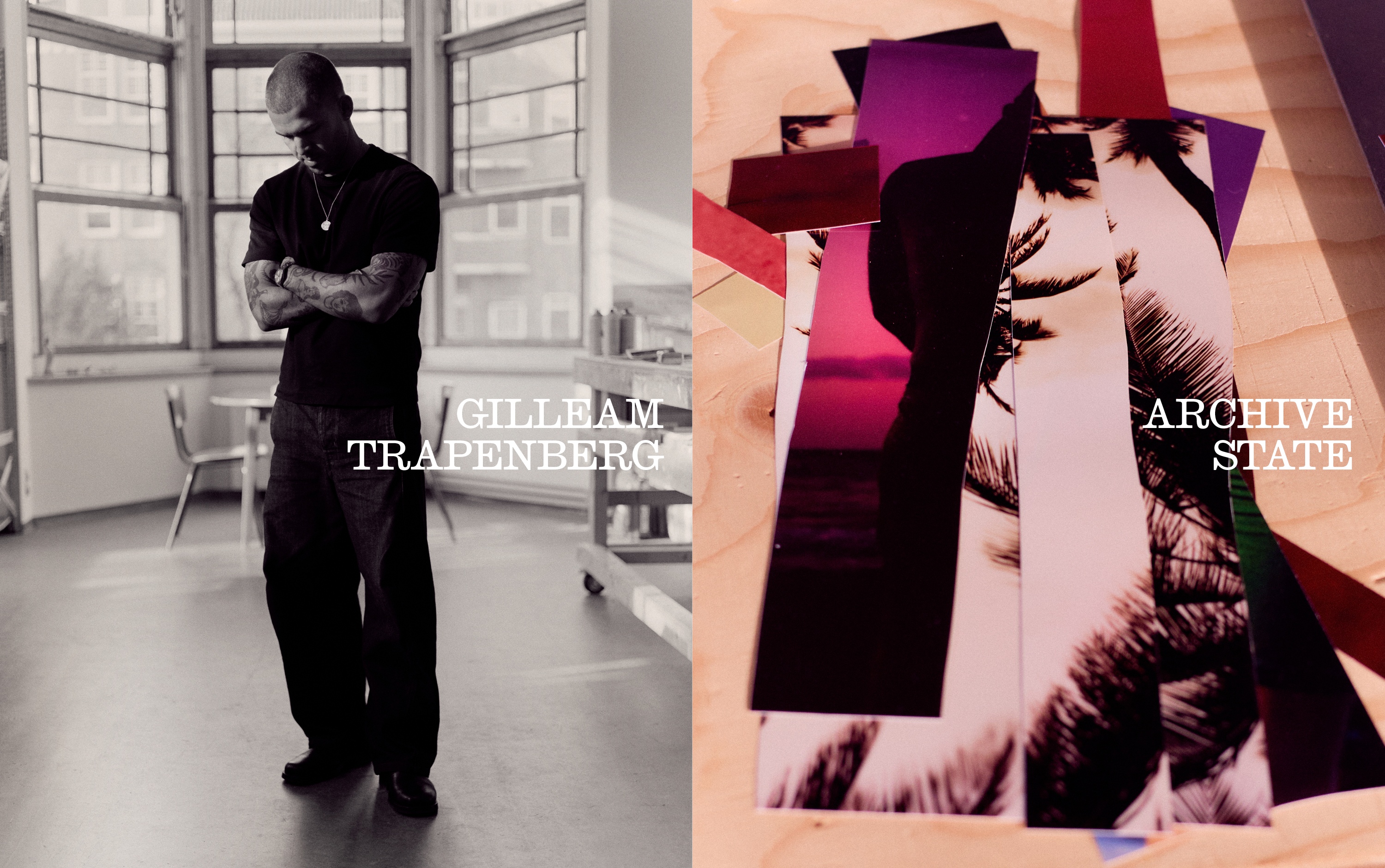
Contact sheets, postage stamps, palm-tree air fresheners. Small images of paradise hiding in plain sight. Photographer Gilleam Trapenberg, born in Curaçao and working between the island and Amsterdam, gathers these images in his work. Often they are only really looked at months later, once they’ve travelled back to the studio. That’s where we meet.
Most of your photographs are made in Curaçao, but the work really
comes together here, in Amsterdam.
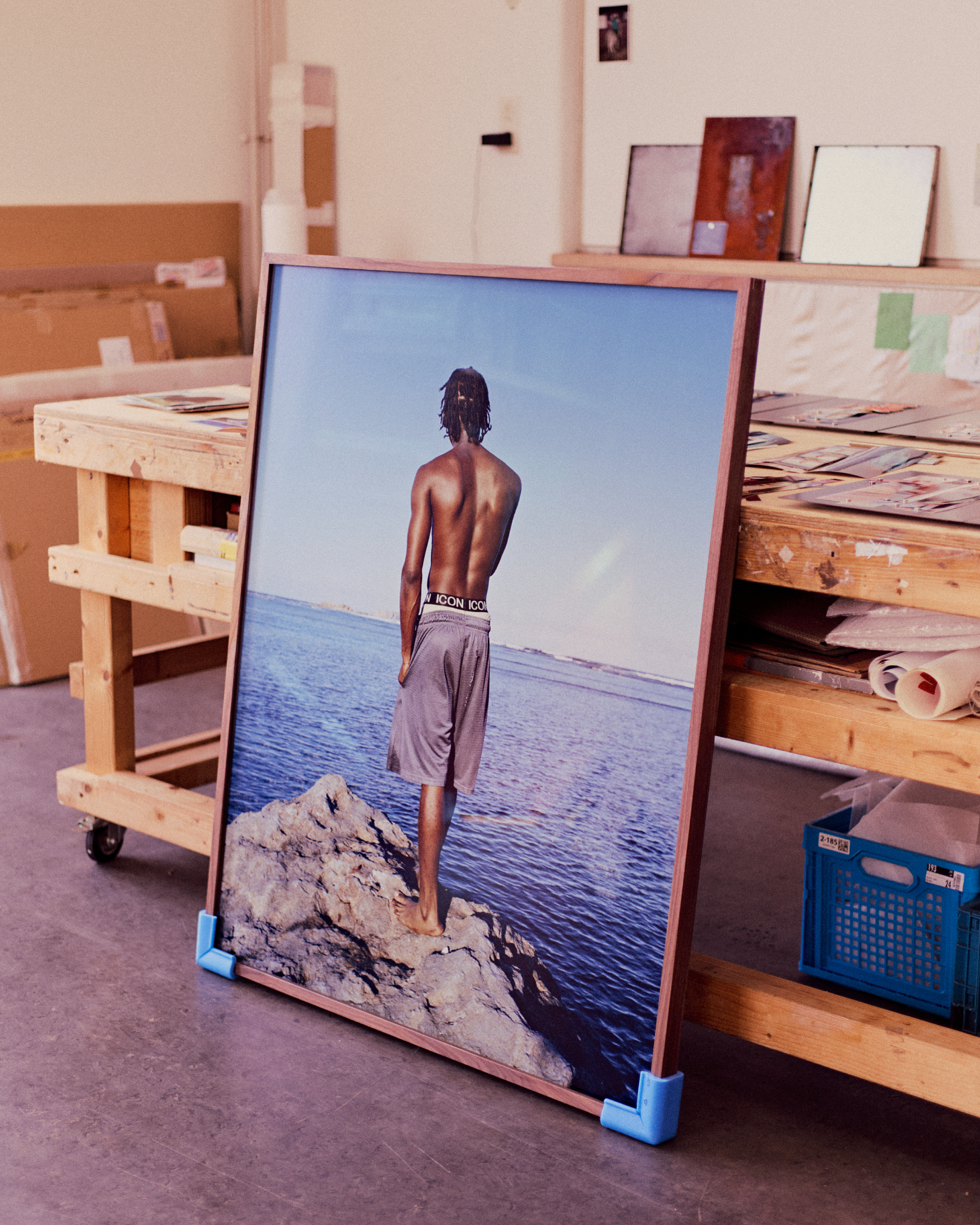
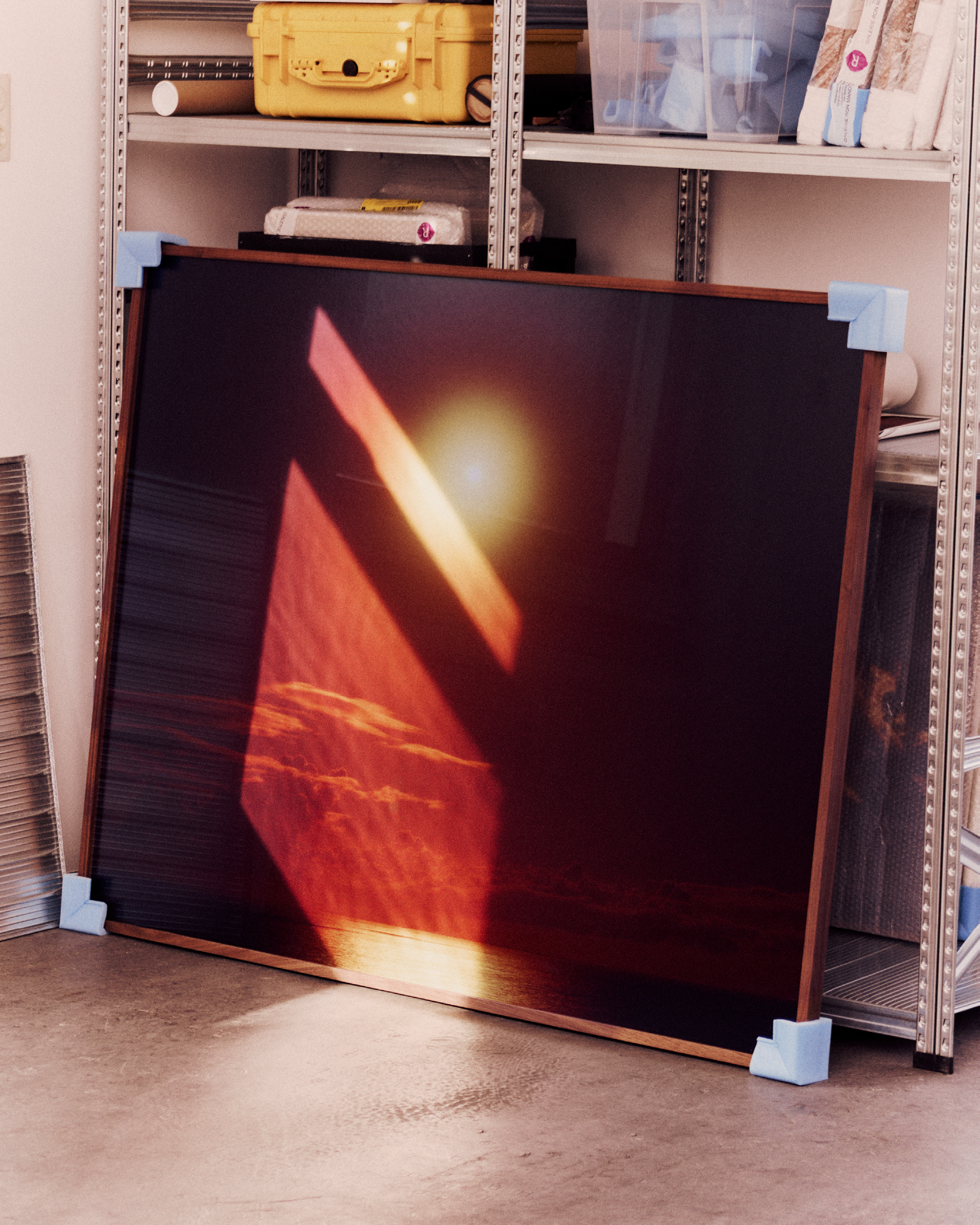
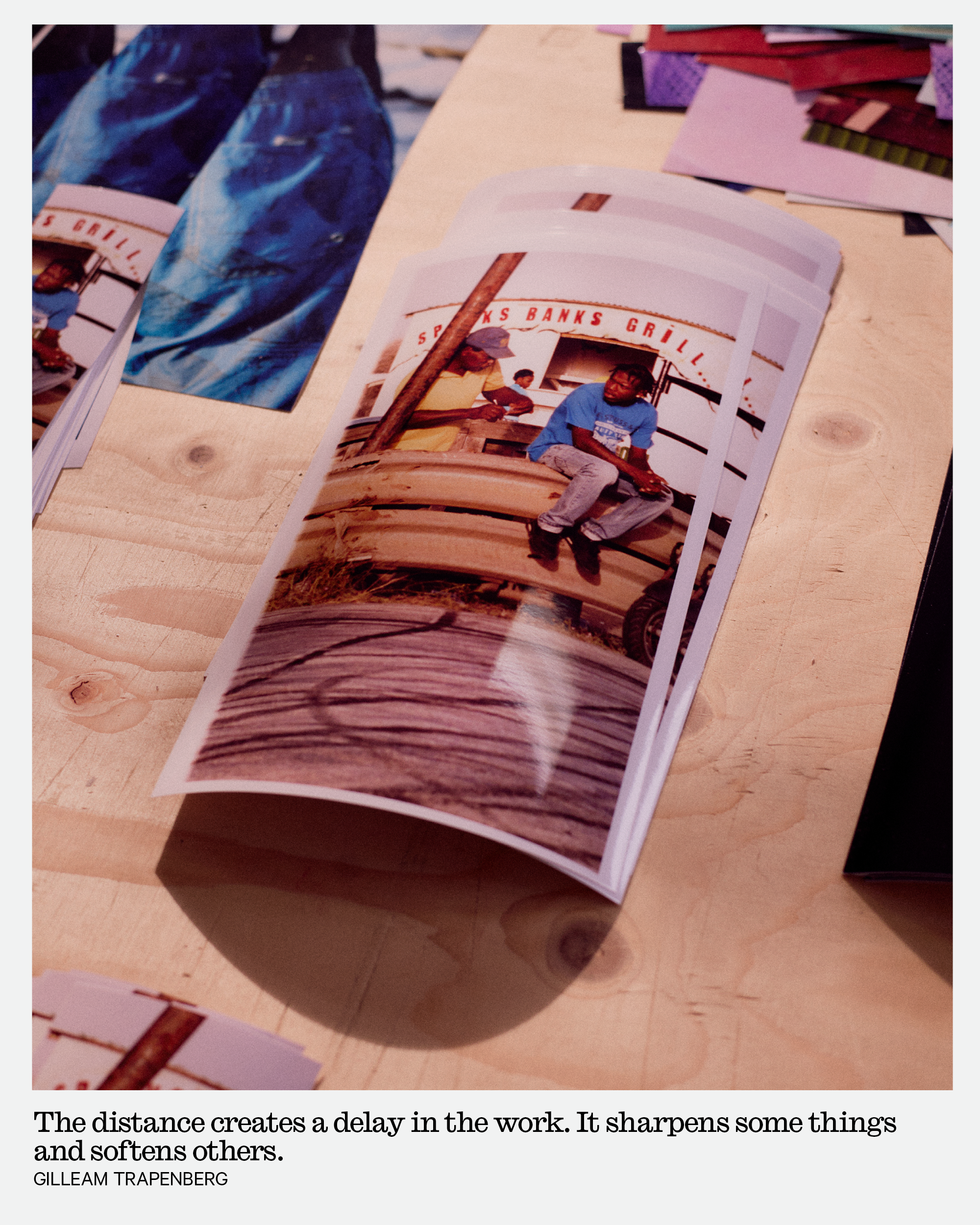
The distance is an integral part of the work. Curaçao is where many of the images are made, but Amsterdam is where I look at them again. When I return to the material months later I often see things differently. The distance creates a delay in the work. That delay gives space to think about what the images are really doing, beyond the moment they were taken.
When you’re photographing there, are you already thinking about how
the work will end up here?
Not really. When I’m photographing I try to stay very close to the moment. I’m not thinking about exhibitions or an end result yet. Because I’m not using a digital camera I can’t immediately reflect on what I’ve made until after I’m back from my work period, which sometimes is months later.
That’s when the distance starts doing something. Certain images suddenly become more important, while others lose their urgency. Distance sharpens some things and softens others. It changes the hierarchy of the images.
In a way I’m collecting fragments of how the island, and the Caribbean more broadly, is represented.
Do images age?
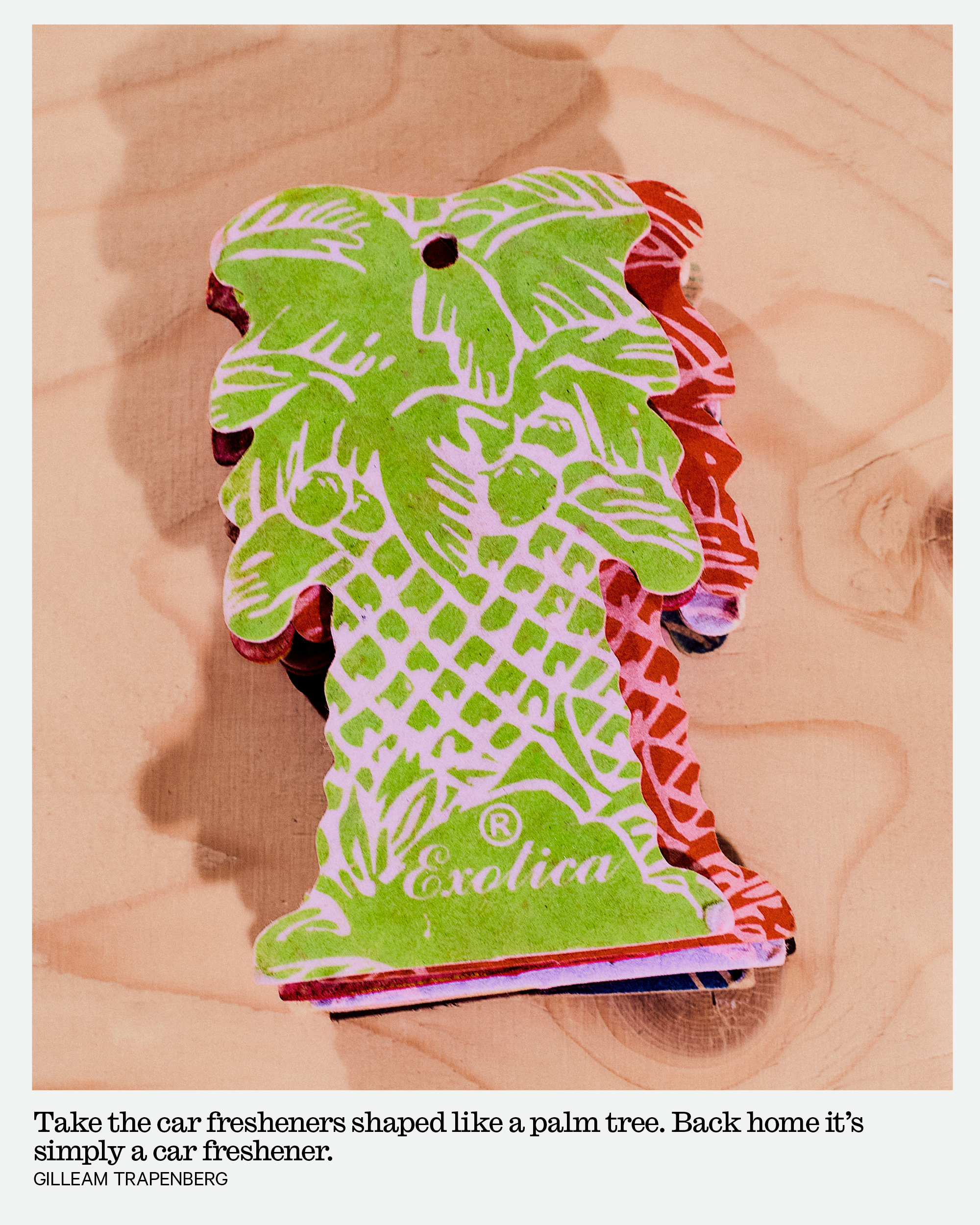
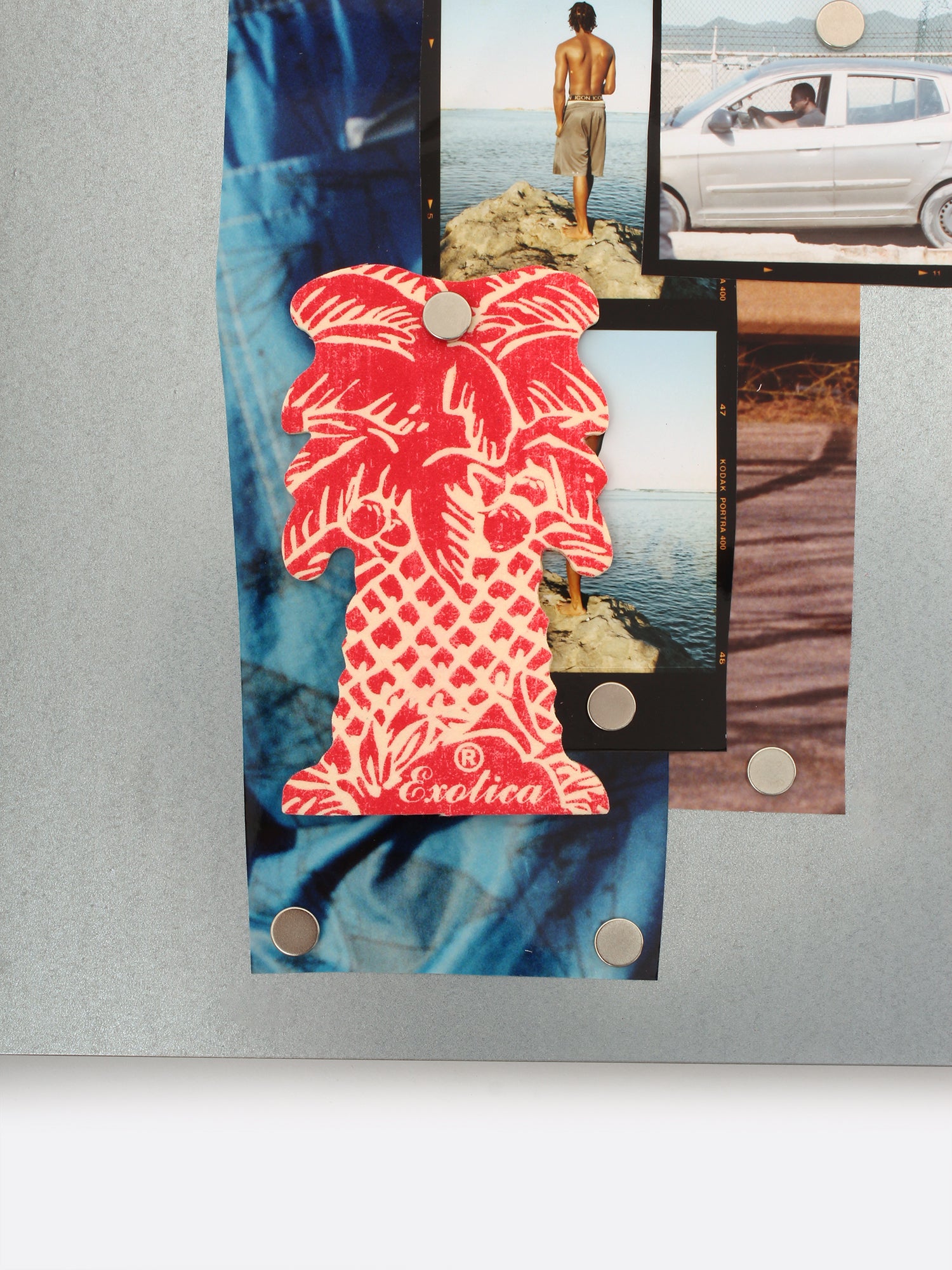
Yes, images definitely age. Sometimes an image that felt very clear when I made it becomes strange later. And sometimes the opposite happens. Context also changes how they’re read. An image made in Curaçao carries different meanings when it’s shown in Amsterdam or somewhere else in Europe. I’m interested in that shift. The work often plays with those layers. Take the car fresheners shaped like a palm tree. Back home it’s simply a car freshener.
And here?
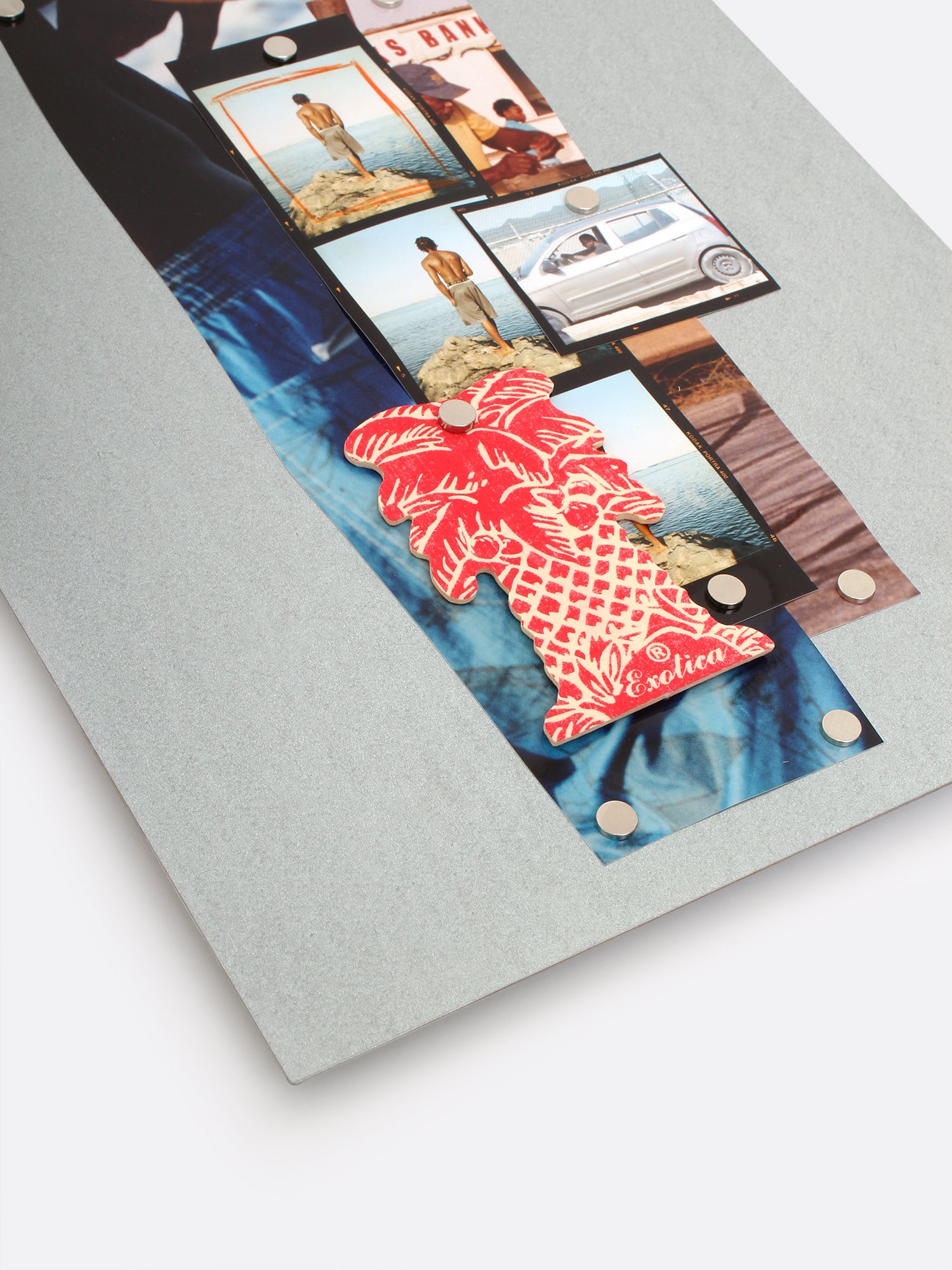
In the context of the work, it suddenly says something about exoticism and the image culture of the Caribbean as paradise.
You keep quite a large archive. What are you actually collecting?
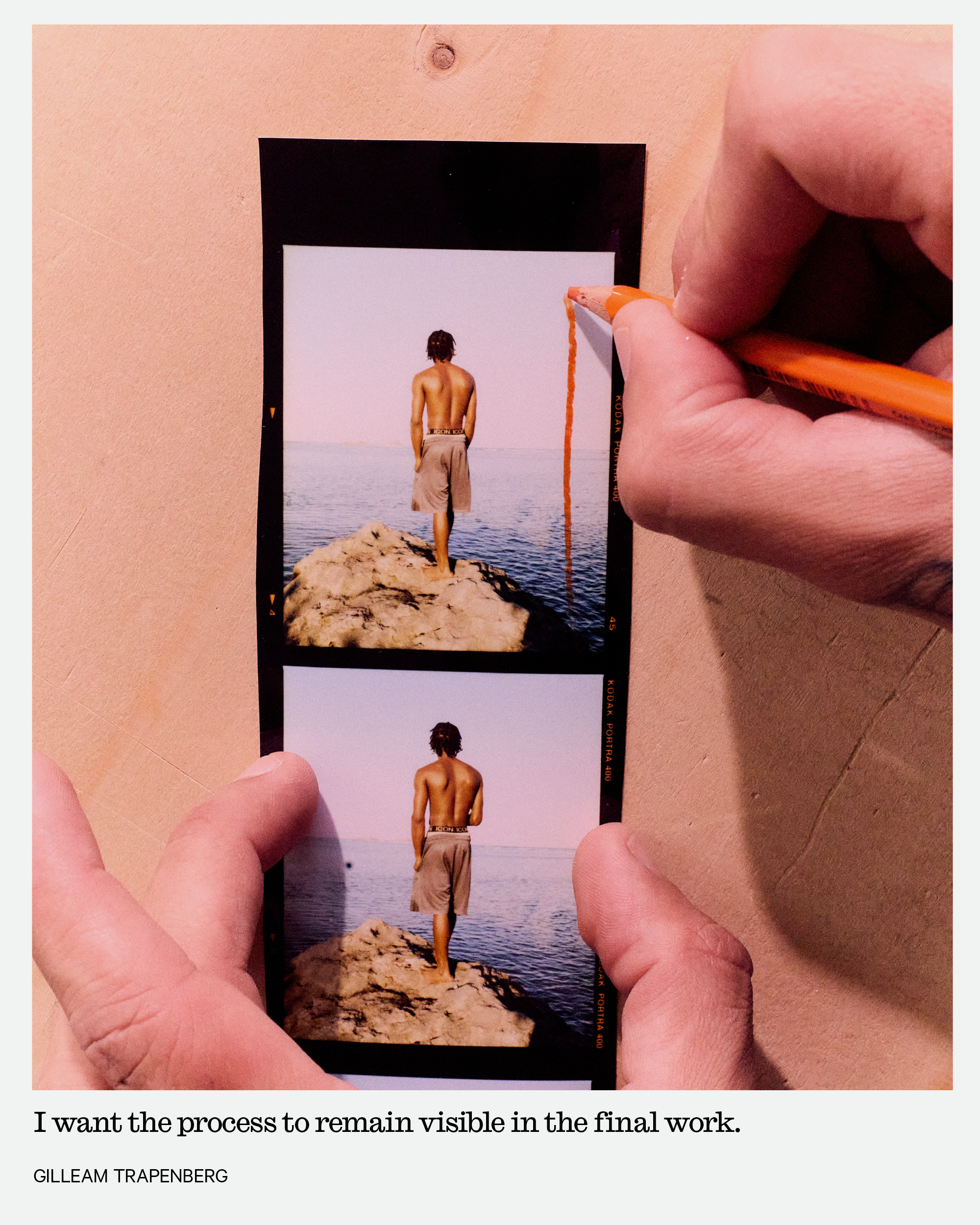
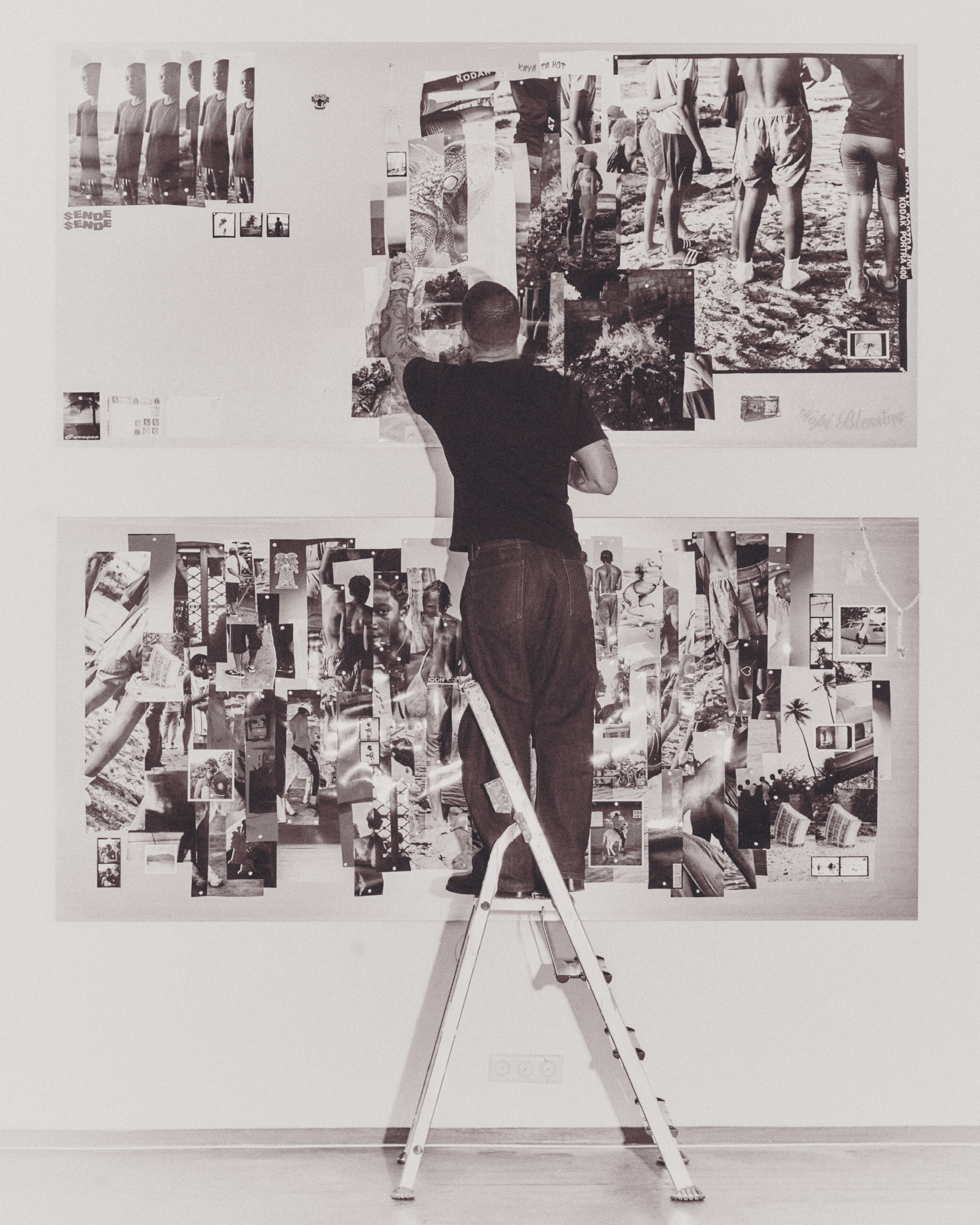
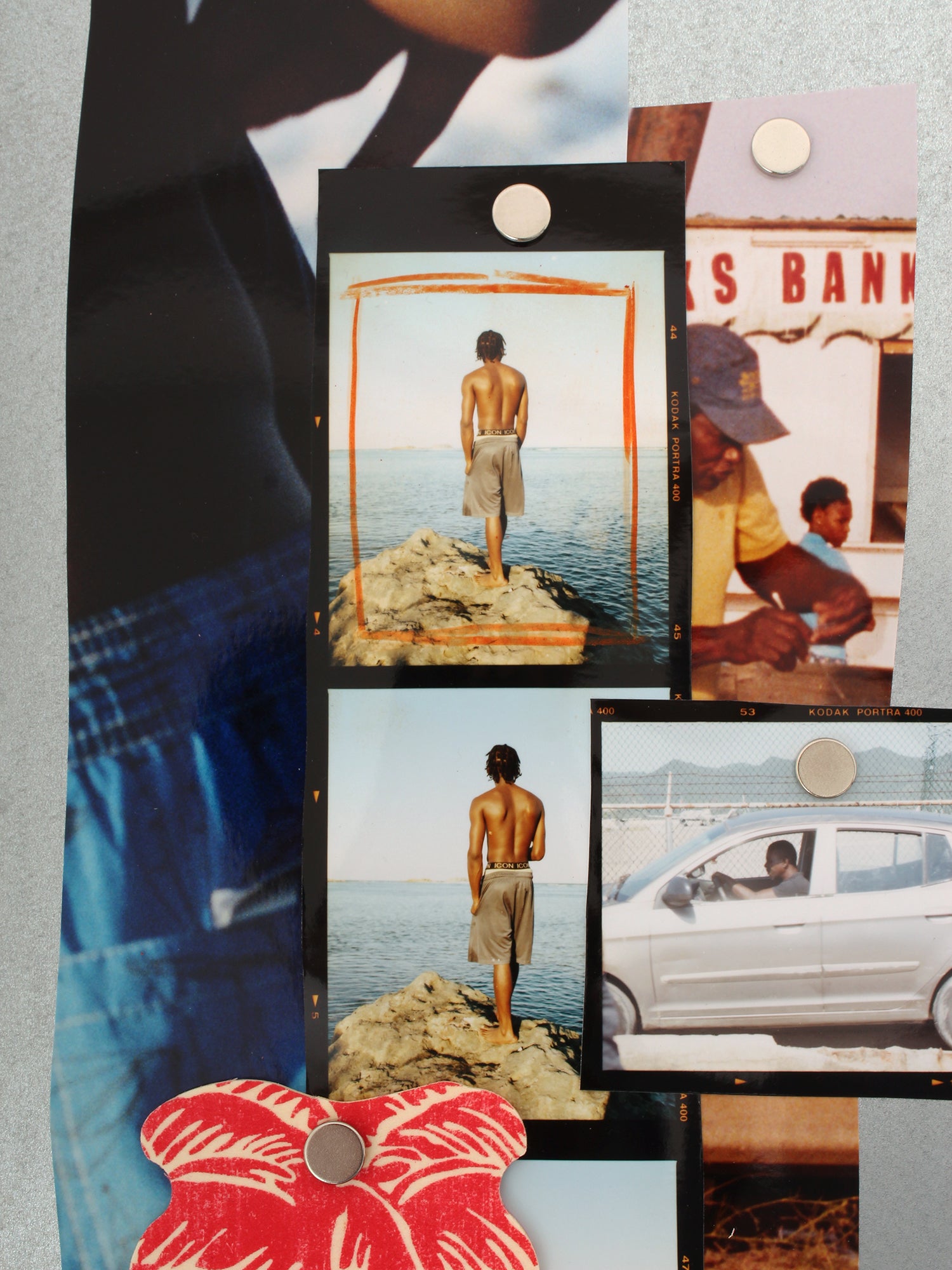
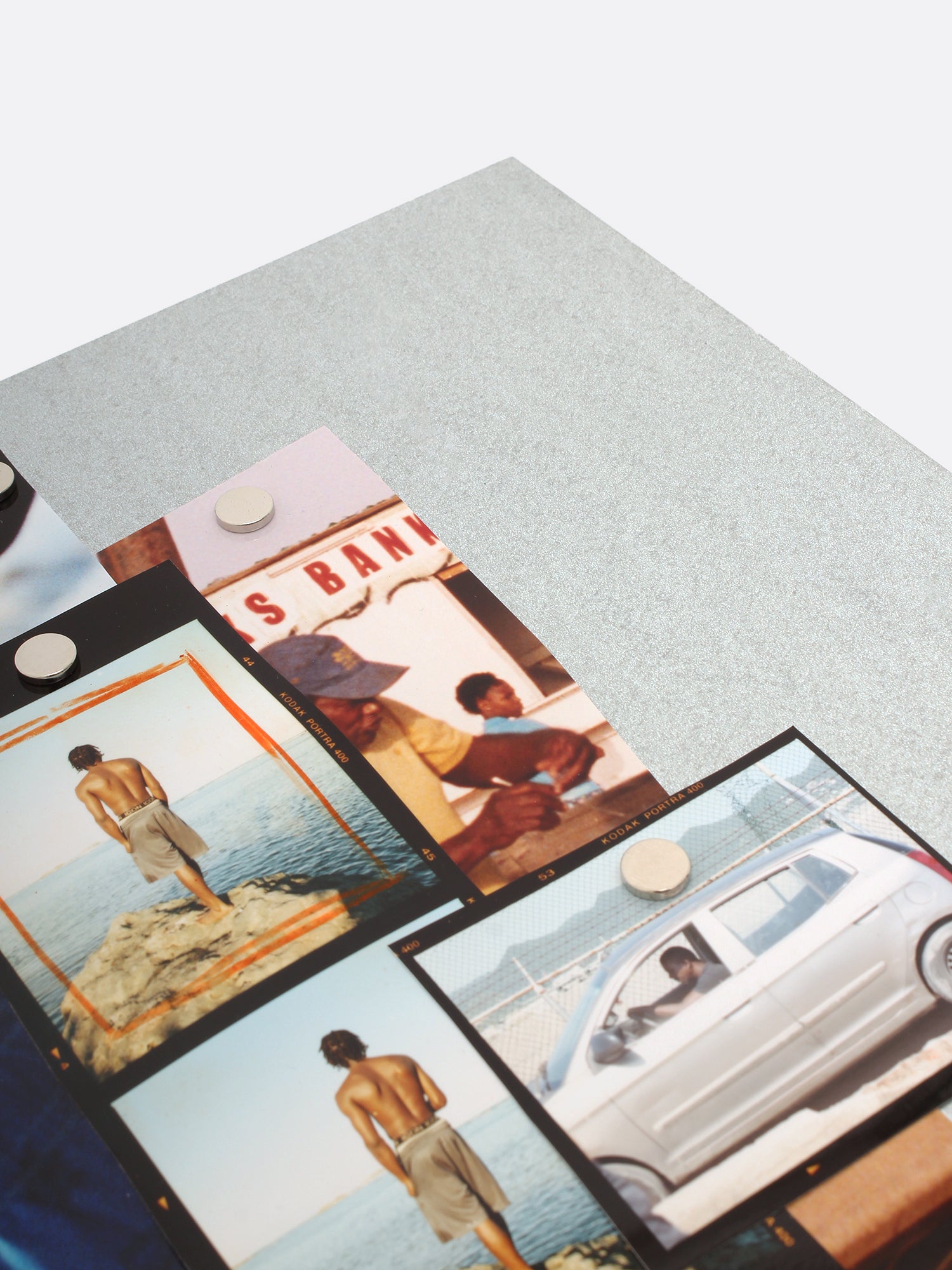
In a way I’m collecting fragments of how the island, and the Caribbean more broadly, is represented. That can be my own photographs, but also local newspapers, car stickers, or car fresheners shaped like a palm tree. Each fragment has its own value. The contact sheets are important because they show the process of looking. They contain the moments before and after the image that eventually becomes a work. The archive becomes a space where these different fragments start speaking to each other.
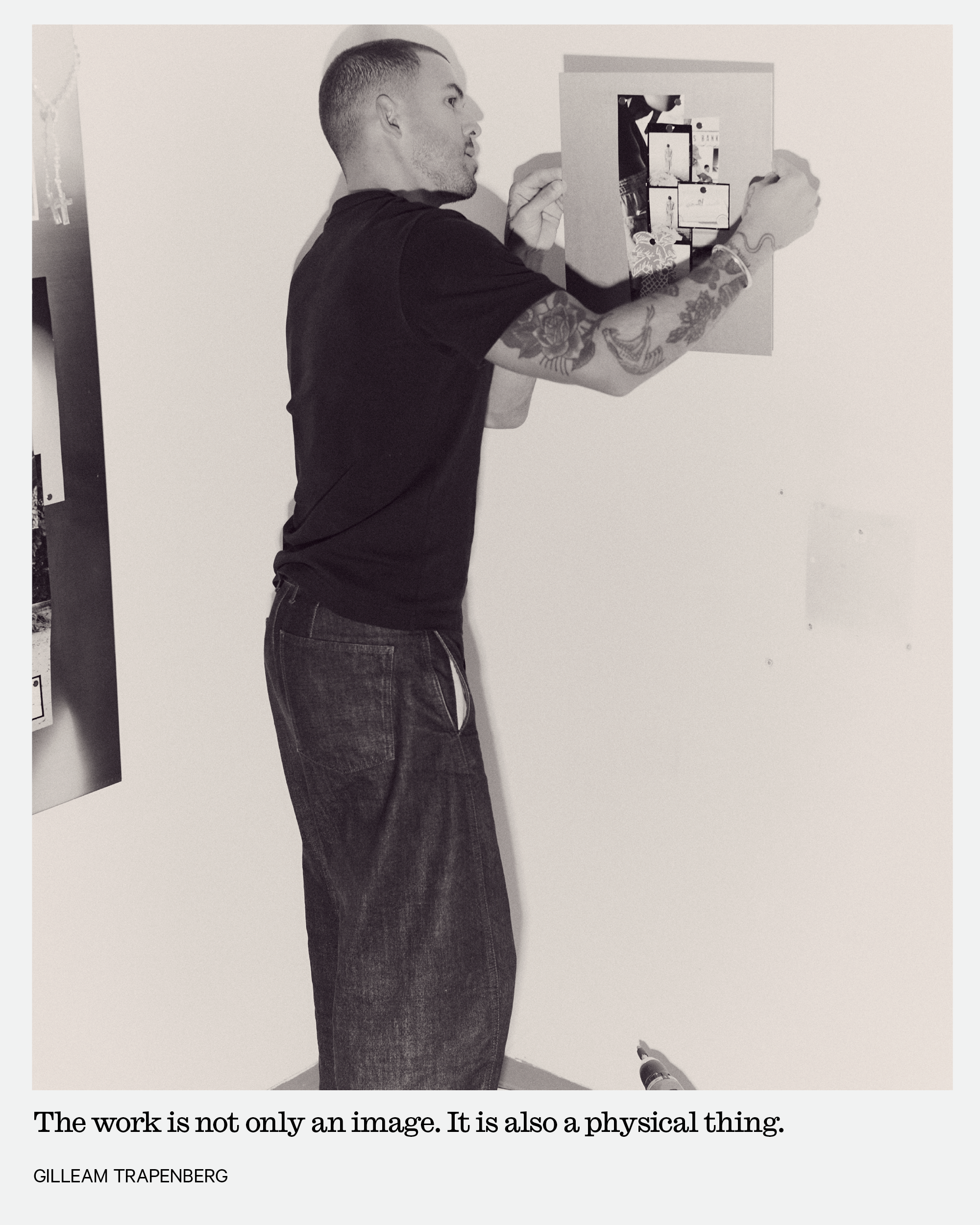
The work is not only an image. It is also a physical thing.
Your installations have grown larger and denser over the years. This edition is smaller again.
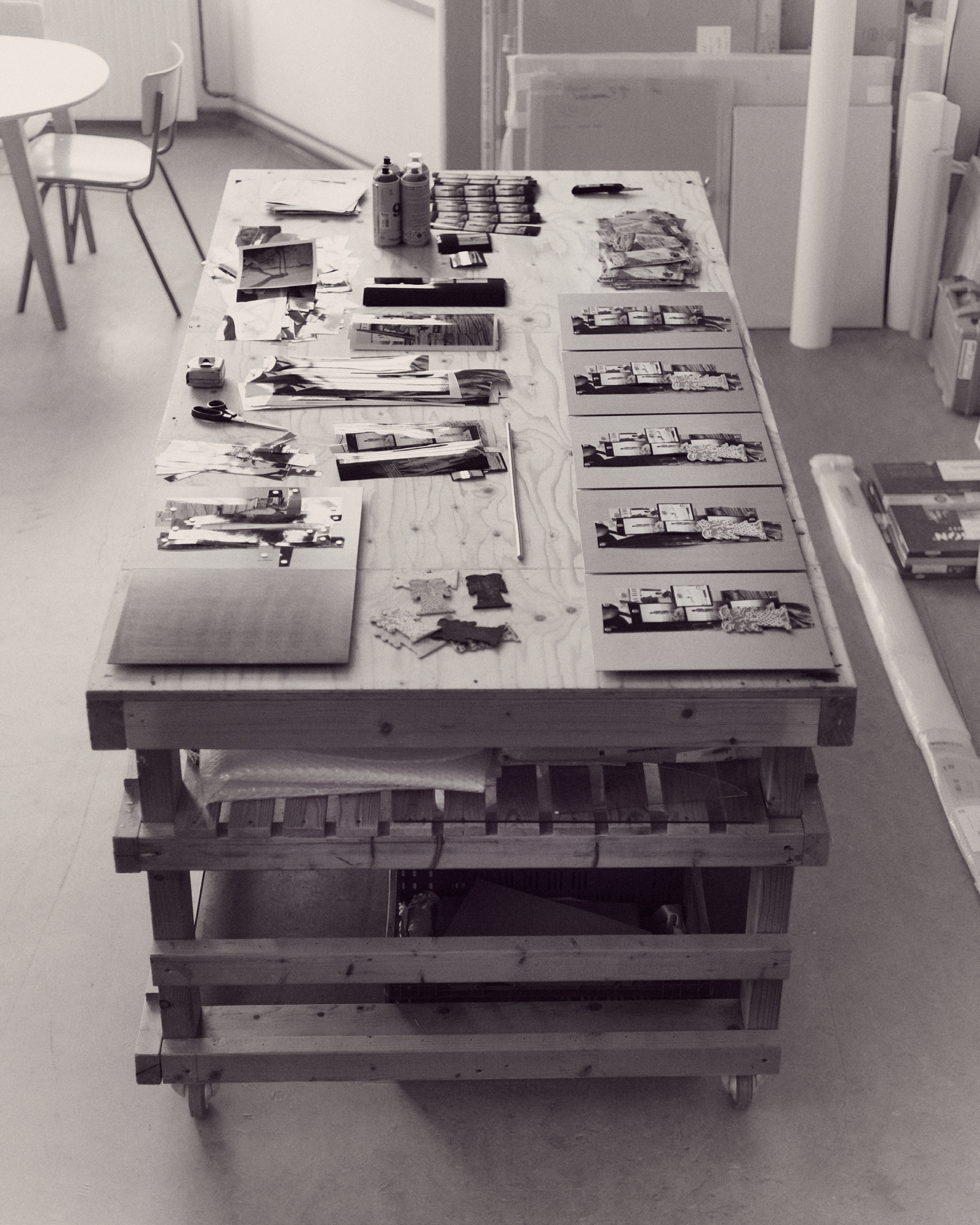
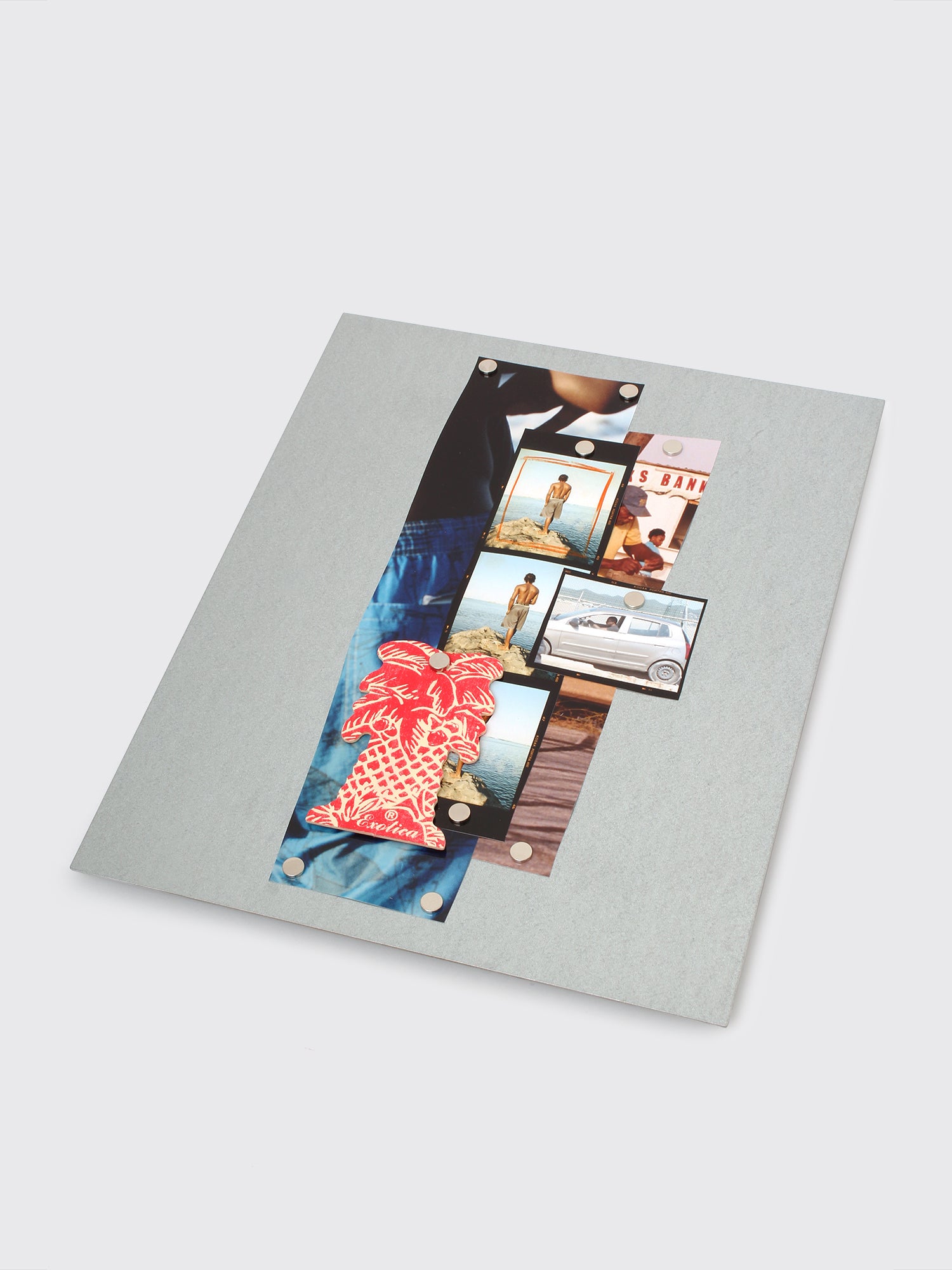
The initial idea was always to build these assemblages on steel plates. They reference the same plates that hang in darkrooms and print labs, where prints are quickly hung to check if they’re good. The first works used the standard size those plates come in: 2.5 by 1.25 metres. Last year I started making sketches on smaller plates because it wasn’t realistic to sketch on the larger ones. That’s when I realised something interesting. Even though the steel plate became much smaller, the work itself remained the same.
Many of the fragments I use come in fixed sizes: postage stamps, contact sheets, car air fresheners, Polaroids. Because of that, these smaller works can look like cut-outs from the larger pieces. I find it interesting to see how size shapes the work.
You print everything by hand.
I want the process to remain visible in the final work. The slight changes in exposure time and shifting colours while trying to make a good print are much closer to what the work actually is than just the final result of a technically “good” print. I also hand cut every piece of paper, which creates small differences. Those variations make every fragment, and therefore every work, a unique object, while still keeping some characteristics of an edition. The works often sit between materials, like the steel plates I use. That construction turns the photograph into something closer to an object than a flat image.
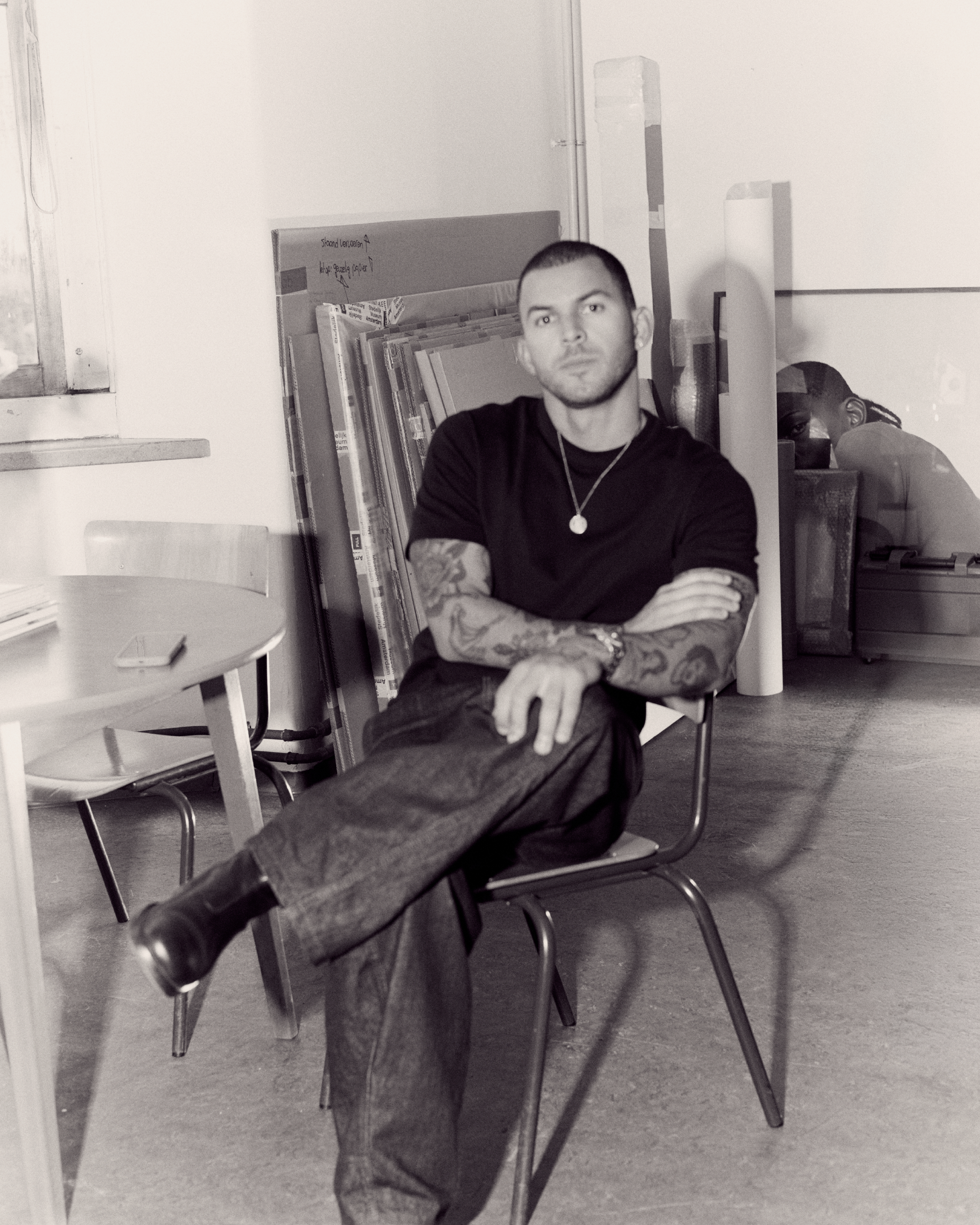
Words and images by Kees de Klein
Photography assistant: Aryan Hamyani
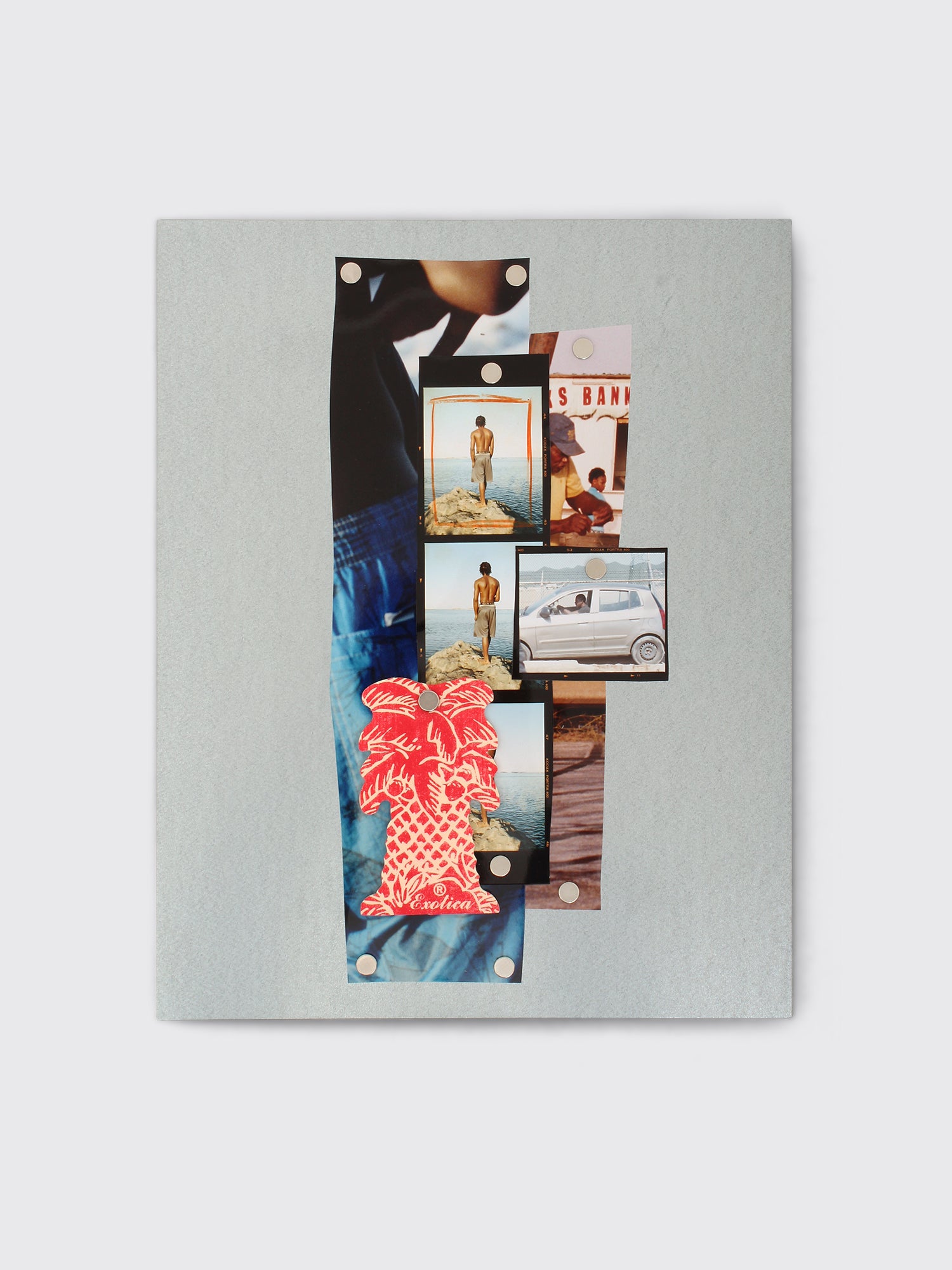
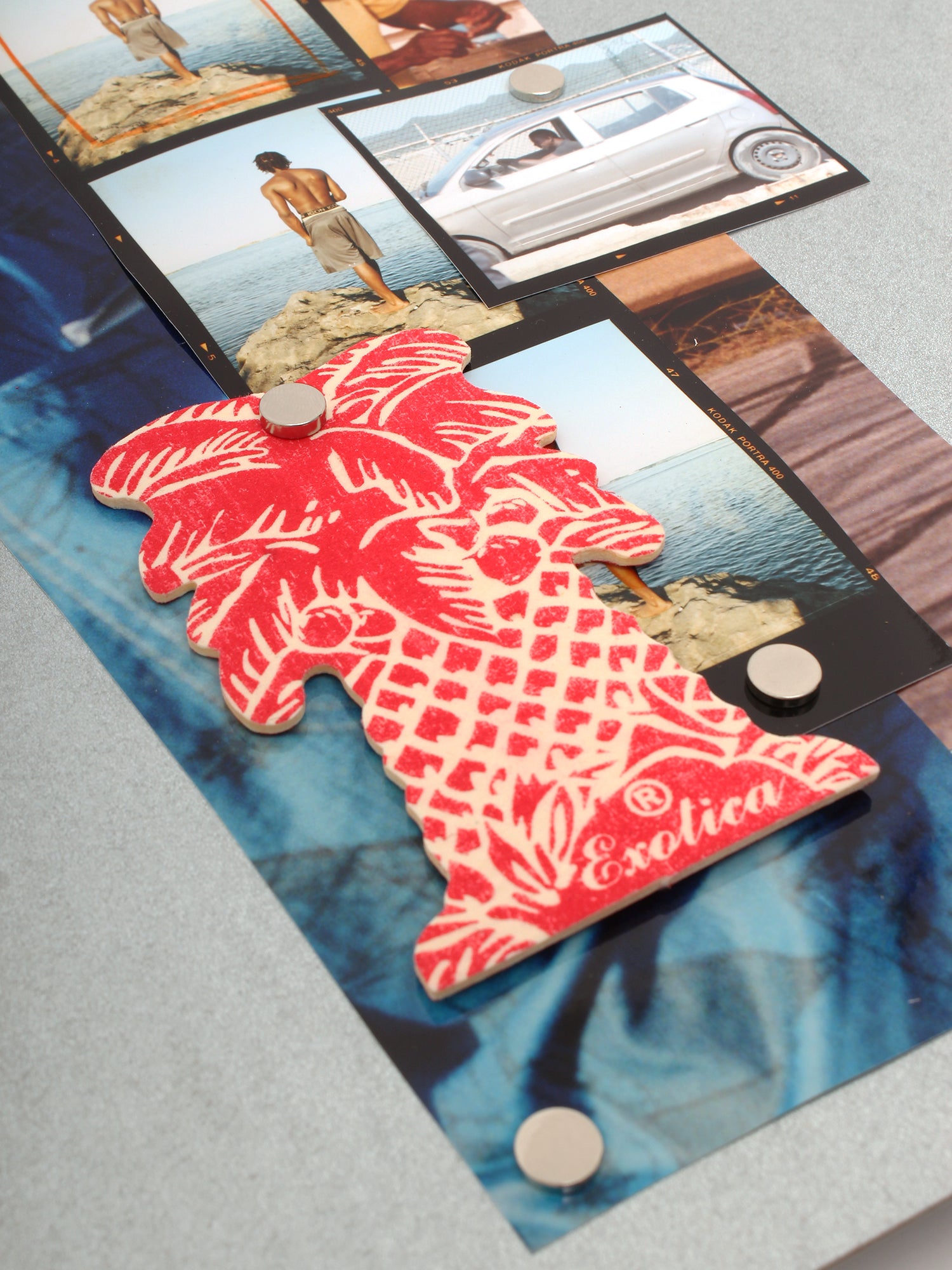
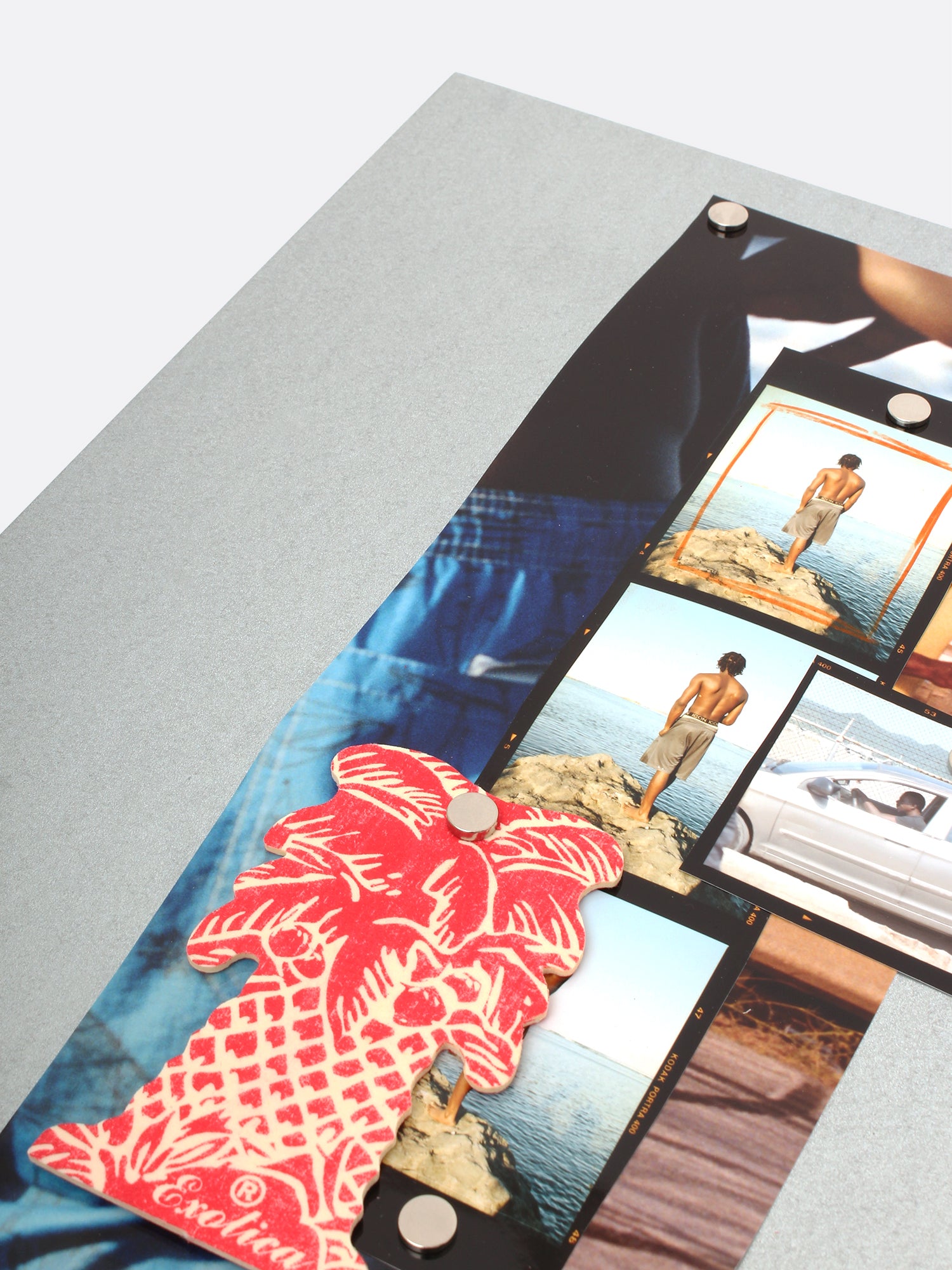
Edition of 20
- 30 cm x 37.5 cm x 2cm
- Steel, photographic paper, neodymium magnets, car freshener
- Signed and numbered by the artist
Pickup available at Unfair Amsterdam
Usually ready in 5+ days
Studio Assemblage 03
Unfair Amsterdam
WG-plein 13
1054 RA Amsterdam
Netherlands